
Alberta’s Premier Danielle Smith is optimistic that federal negotiators will reconvene after the breakdown of trade discussions in Washington, which resulted in a 50% tariff on Canadian exports.
According to Smith during her radio program Your Province, Your Premier on Saturday morning, approximately $1.5 billion of Alberta’s $188 billion trade with the United States is at risk. She described the last-minute demands from U.S. negotiators as “untenable” and “too painful” for Canada to accept.
“I sincerely hope they can come back to the negotiating table to come up with a fairer solution,” she stated. “I’m quite hopeful that some productive discussions will take place because the tariff warfare is quite distressing.”
Smith made her comments shortly after Prime Minister Mark Carney declared that Canada would impose retaliatory tariffs on the United States on a dollar-for-dollar basis starting September 8. She expressed her desire for negotiations to continue and for an agreement to be reached before that deadline.
During a press conference in Ottawa, Carney remarked that U.S. negotiators sought to limit Canada’s capacity to establish trade agreements with other nations. He noted that the Canadian automotive sector would have been adversely affected by the proposed deal, and there were concerns regarding Canadian support for French cultural initiatives.
“We cannot agree to what they have proposed, and we will not concede to their requests,” Carney stated, adding that the U.S. had “demanded too much while offering too little.”
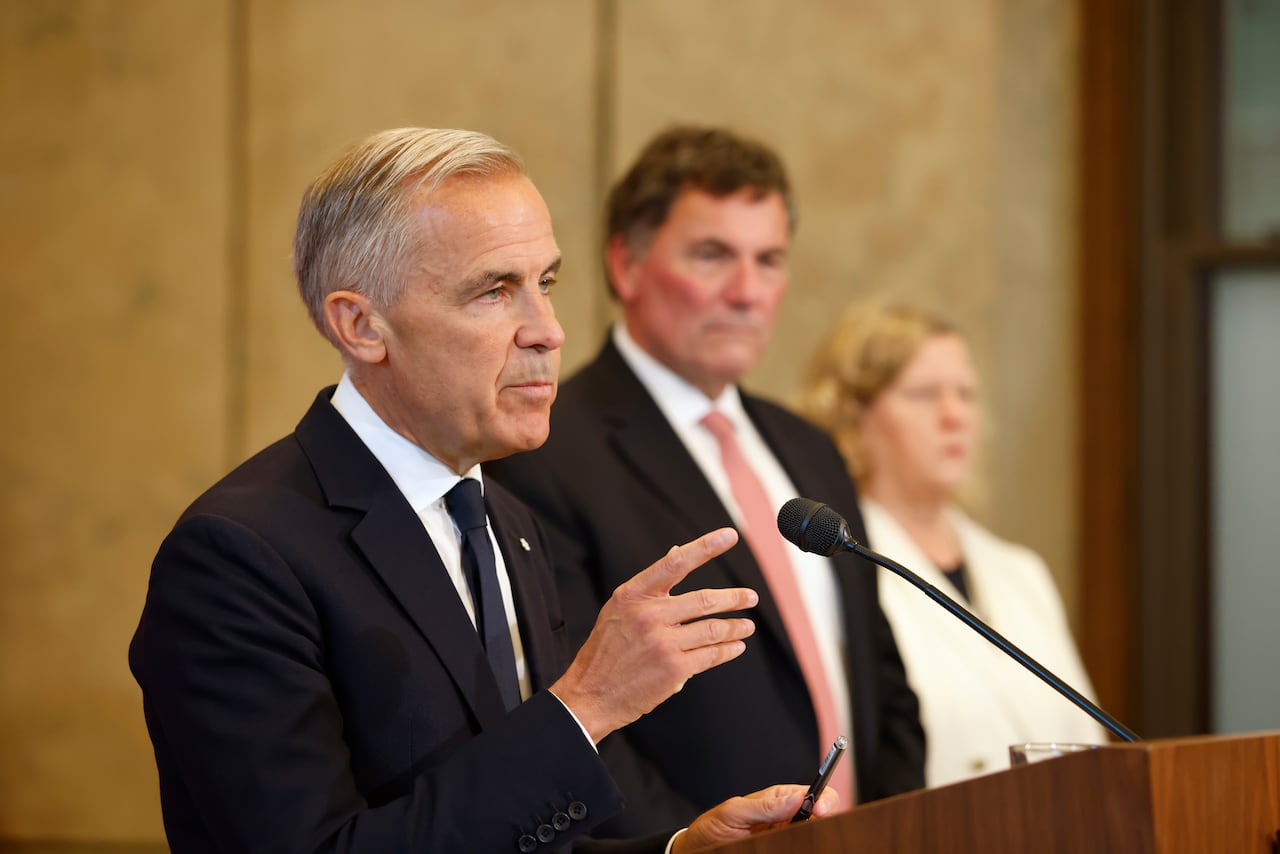
Canada-U.S. Trade Minister Dominic LeBlanc and chief trade negotiator Janice Charette listen as Prime Minister Mark Carney speaks about Canada’s response to new U.S. tariffs during a news conference on Parliament Hill in Ottawa on Saturday, Aug. 22, 2026. (Patrick Doyle/The Canadian Press)
Smith expressed her astonishment at the proposed trade restrictions, mentioning that Alberta has been working to double its exports to nations beyond the U.S.
Nonetheless, she expressed caution regarding retaliatory tariffs on American products, emphasizing her lack of interest in prohibiting imports of U.S. alcohol. Alberta and Saskatchewan remain the only provinces without such a ban.
She also raised concerns about the potential effects of a trade conflict on farmers and agricultural machinery, emphasizing that Alberta’s furniture manufacturers and honey producers are particularly vulnerable.
-
American tariffs on Canadian goods take effect after trade talks fall apart
-
Carney says he doesn’t ‘see the value’ in using energy as leverage in U.S. trade talks
“I understand the emotional appeal of retaliating; it resonates with many. However, when retaliation occurs, it results in everyone purchasing products from the United States facing tariffs of up to 50%,” she remarked.
On Monday, Smith will convene her cabinet to assess the extent of the new trade measures, review federal assistance proposals, and discuss future actions.
Significant impacts on small businesses
Smith noted that Alberta’s primary exports of natural gas and oil are unlikely to be severely affected by the new tariffs.
Kayode Southwood, a senior policy analyst for the Canadian Federation of Independent Business (CFIB), informed CBC News on Saturday that small businesses throughout Canada and Alberta will experience “immediate and significant consequences.”
He pointed out that around 40% of Alberta’s small businesses export to the U.S., and half of them import goods from America.
“This latest round of tariffs will have a much more significant effect than earlier ones,” he stated. “Any retaliatory tariffs imposed by the Canadian government will severely impact those Alberta businesses.”
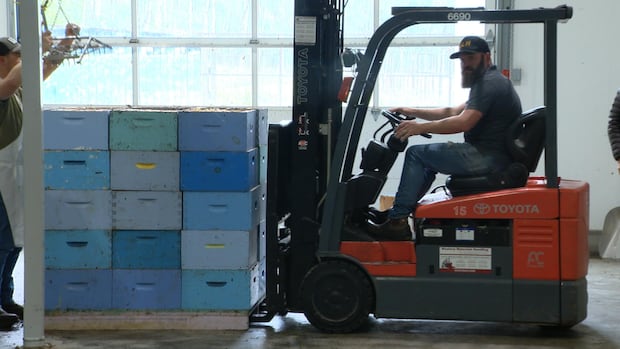
Premier Danielle Smith says she’s urging the federal government to restart negotiations with the United States after trade talks fell apart late Friday night, bringing the Trump administration’s 50 per cent tariffs on a wide range of Canadian exports into effect. As CBC’s Jo Horwood reports, small business owners in Alberta are figuring out how to survive this trade dispute, while politicians and local business leaders consider whether walking away from negotiations was the right decision.
Deborah Yedlin, president of the Calgary Chamber of Commerce, expressed her support for Carney’s choice to halt negotiations, but cautioned that without a resolution, up to 100,000 jobs across Canada are at risk.
She expressed hope for a prompt return to negotiations from both parties but also framed the trade breakdown as an opportunity for Canada to reassess its interprovincial trade and enhance its international trade relationships.
“We are aware that we have free trade agreements with 51 nations covering 60% of the global GDP, yet we have only been exporting 33%,” Yedlin observed.

