
For Cheryl Tootoosis, her work with horses transcends mere enthusiasm. It represents a dedication to empowering others to discover confidence, connection, and healing.
Her commitment is so profound that she left behind a full-time career in nursing.
Together with her husband Tyler, Tootoosis established Mistatim Healing, an equine-assisted learning program aimed at supporting students who encounter emotional and personal difficulties, located at Poundmaker Cree Nation, roughly 180 kilometers northwest of Saskatoon.
Tootoosis’s path began as she witnessed her daughter’s challenges while enrolled at the nearby Cut Knife Community School.
“She faced severe anxiety and bullying, and I saw her become withdrawn,” she recounted. “One day, she exclaimed, ‘I don’t want to go here anymore.’ She would return home in tears.”
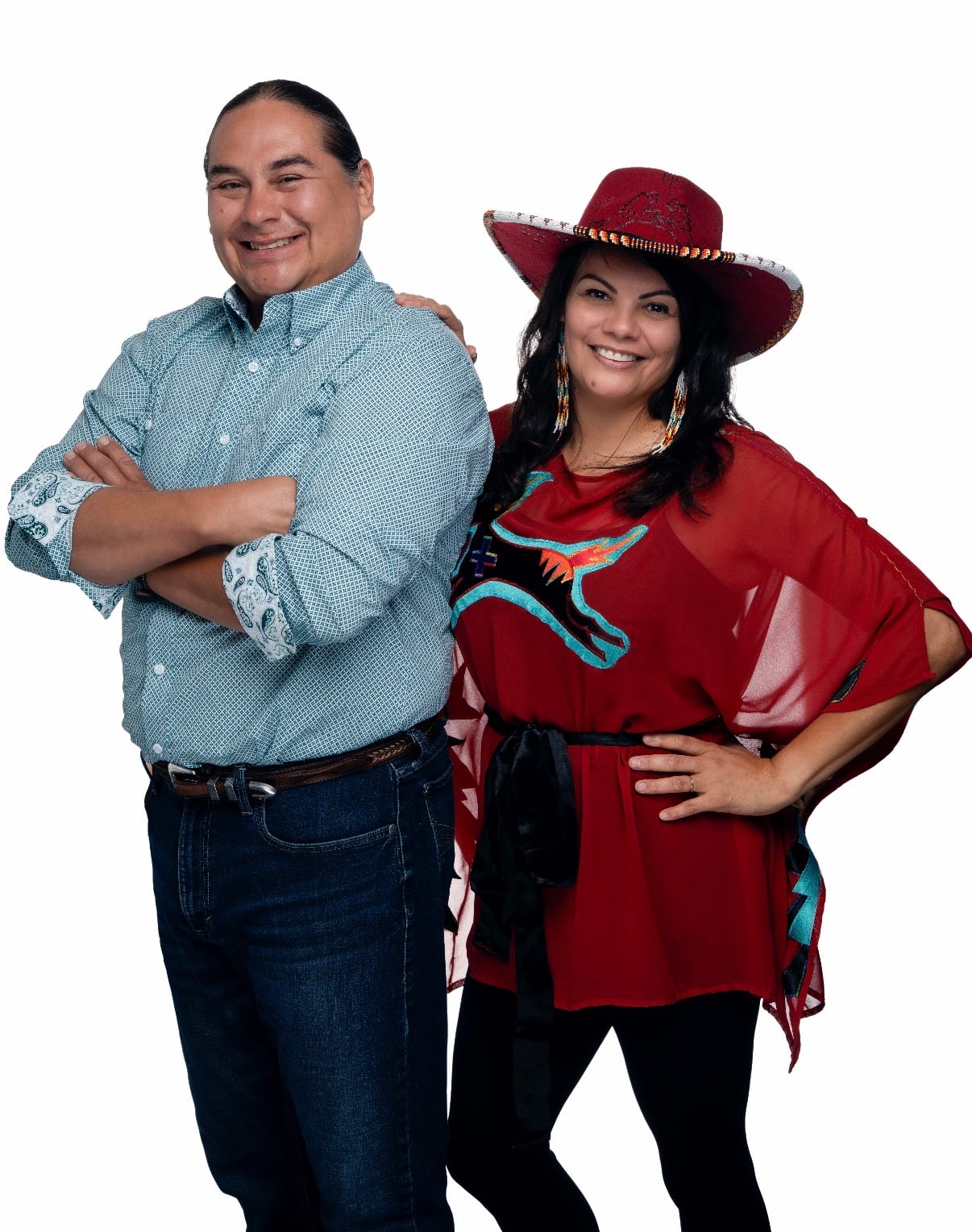
Tyler and Cheryl Tootoosis, the founders of Mistatim Healing. (Submitted by Cheryl Tootoosis)
Witnessing the positive transformation in her daughter through equine interaction inspired Tootoosis to offer similar opportunities to other youth facing comparable issues.
Pursuing her passion demanded significant personal sacrifices. She found it increasingly challenging to juggle her nursing career, family obligations, and the burgeoning equine business.
“I was experiencing burnout,” Tootoosis admitted. “I couldn’t fully focus on my children because I was stretched too thin.”
Ultimately, she chose to resign from her nursing position to fully commit to the equine venture.
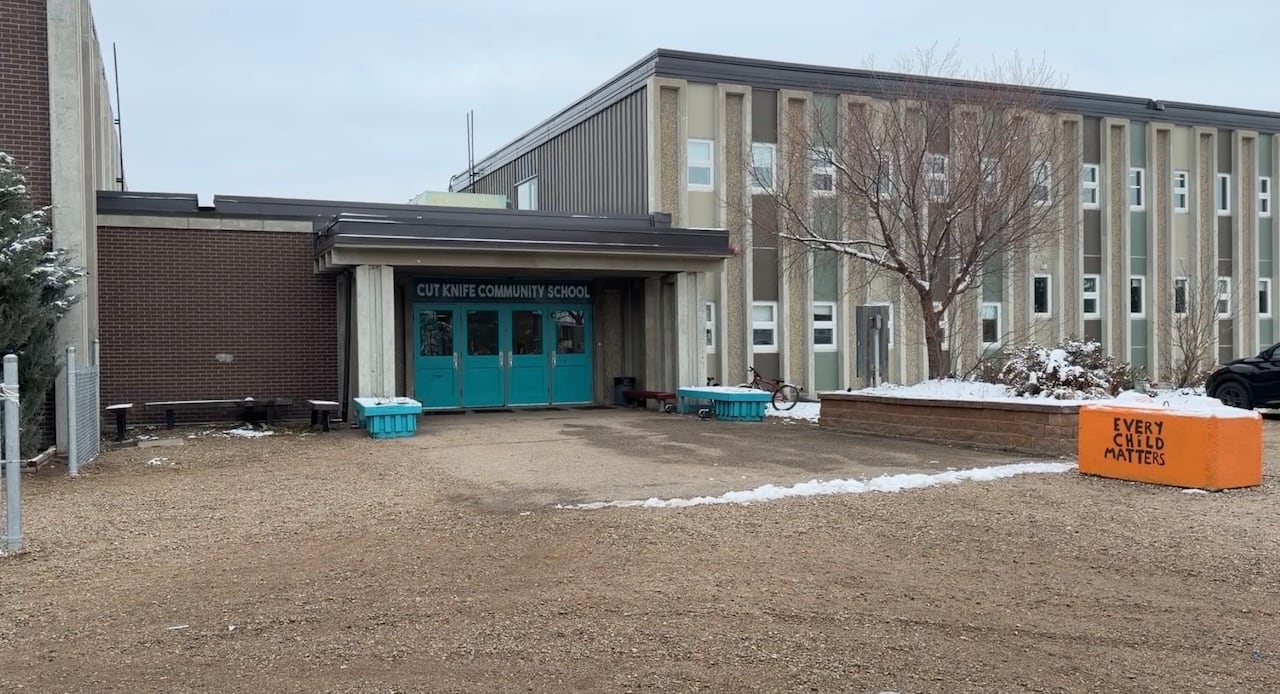
Cut Knife Community School has adopted alternative learning methods for its students. (Jordon Weenie/CBC)
She secured a grant to collaborate with Cut Knife Community School and the Living Sky School Division to introduce Mistatim Healing to their students.
The program merges fundamental horsemanship, teamwork, and Indigenous land-based education, fostering patience, trust, and emotional awareness through direct engagement with horses.
In addition to enhancing students’ well-being, Tootoosis noted that the initiative also fosters reconciliation between Cut Knife and the surrounding Indigenous communities.
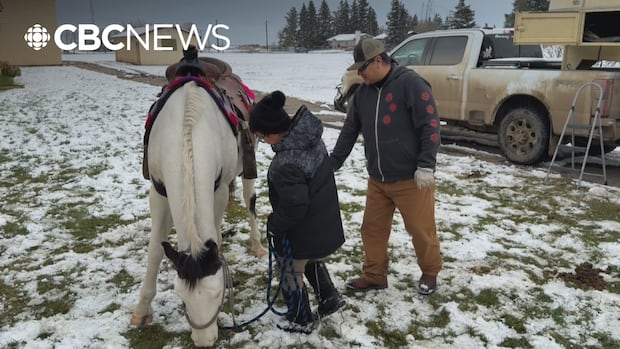
An Equine Therapy program in Cut Knife, Sask. is bringing horses to students. The hands-on learning experience helps students develop patience, trust and emotional awareness. It also incorporates Indigenous cultural teachings as a form of reconciliation.
By integrating Indigenous cultural teachings and facilitating shared experiences among students, the program aspires to enhance relationships grounded in understanding, respect, and connection.
For Tootoosis, the teachings extend beyond horse interactions. They emphasize the importance of being present and mindful.
“It’s about living in the moment. There’s no need to dwell on the past or fret about the future,” she stated.
Transformations Beyond the Classroom
According to Cut Knife teacher Tracy Anseth, she is already observing positive developments in the children participating in the program, many of whom arrive at school with various challenges.
“We encounter increasing levels of anxiety and stress, with students who carry trauma, which affects their learning in the classroom,” she explained.
Anseth has seen advancements in students’ communication and enthusiasm, noting that some have become more vocal in class and look forward to their upcoming sessions.
For Grade 4 student Kazdon Checkosis, Mistatim Healing has helped him conquer his fear of horses. He gradually became more at ease, learning to approach, guide, engage with, and even ride Sonny, the horse he works with.
“I’m not scared of horses anymore,” Checkosis said, beaming with pride.
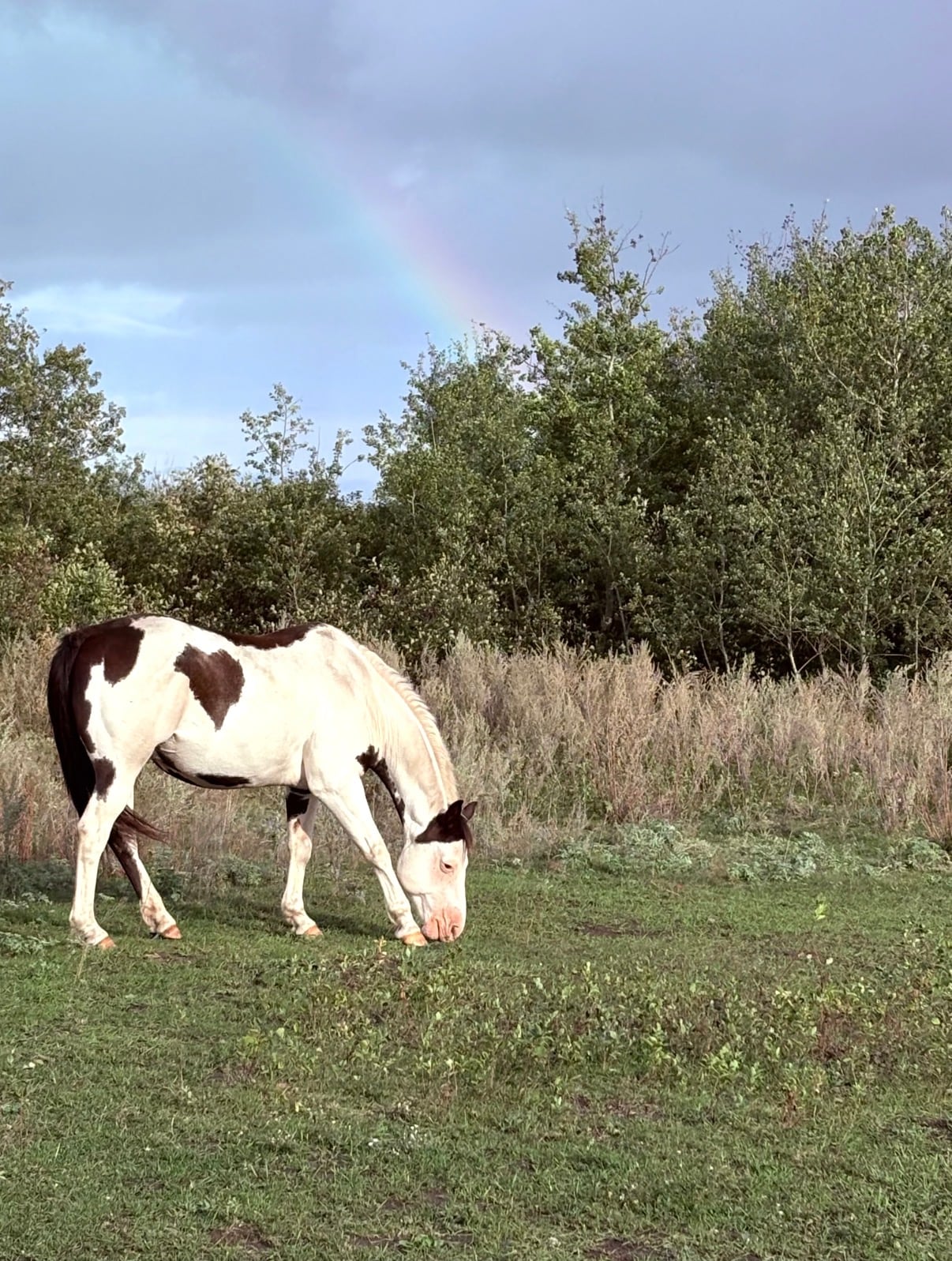
Sonny is one of the horses used in Mistatim Healing. (Cheryl Tootoosis)
Instances like this affirm Tootoosis’s choice to embark on the Mistatim Healing journey.
What started as a mother’s quest to assist her daughter has evolved into a program that benefits students and fosters opportunities for cultural understanding and reconciliation.
“They are so joyful and proud,” she remarked.
Tootoosis noted that the children return to school excited about the chance to walk and ride a large animal, learning that they can conquer their fears and anxieties.
“I can achieve anything. If I can walk with a horse and ride it, then I can overcome any fears or anxieties I face at school or in life.”

