
Over the next several weeks — assuming the skies are clear — you can catch a glimpse of the International Space Station (ISS) as it travels overhead each evening.
If you spot it, consider giving a wave to Canadian Space Agency astronaut Joshua Kutryk, who is soaring past at a speed of 7.66 kilometers per second.
Kutryk is among the seven crew members currently residing and working aboard the space laboratory as part of Expedition 75.
Since his arrival at the ISS on October 1, Kutryk has been engaged in numerous experiments and responsibilities, including a recent study on heart health.
Naturally, he’s also been admiring the spectacular views.
The ISS frequently appears in the Canadian sky as it orbits our planet. In the upcoming weeks, it will be visible in the evening sky instead of the typical early-morning sightings.
Locating the ISS in the Night Sky
It’s quite simple; the ISS will resemble a bright white dot — standing out against the multitude of fainter lights that represent satellites — gliding across the sky. Unlike airplanes, it won’t have blinking lights and will move in a consistent direction.
-
Joshua Kutryk says he’s ‘having a blast’ on the International Space Station
-
Canadian astronaut Joshua Kutryk conducts his 1st spacewalk
Next, you’ll need to determine when the ISS will be flying overhead. You have multiple options for this.
One option is heavens-above.com, a dedicated website that monitors various satellites and space vehicles. By entering your location, you can find the ISS alongside other visible objects. This site will generate a timetable for you, similar to the one shown below.
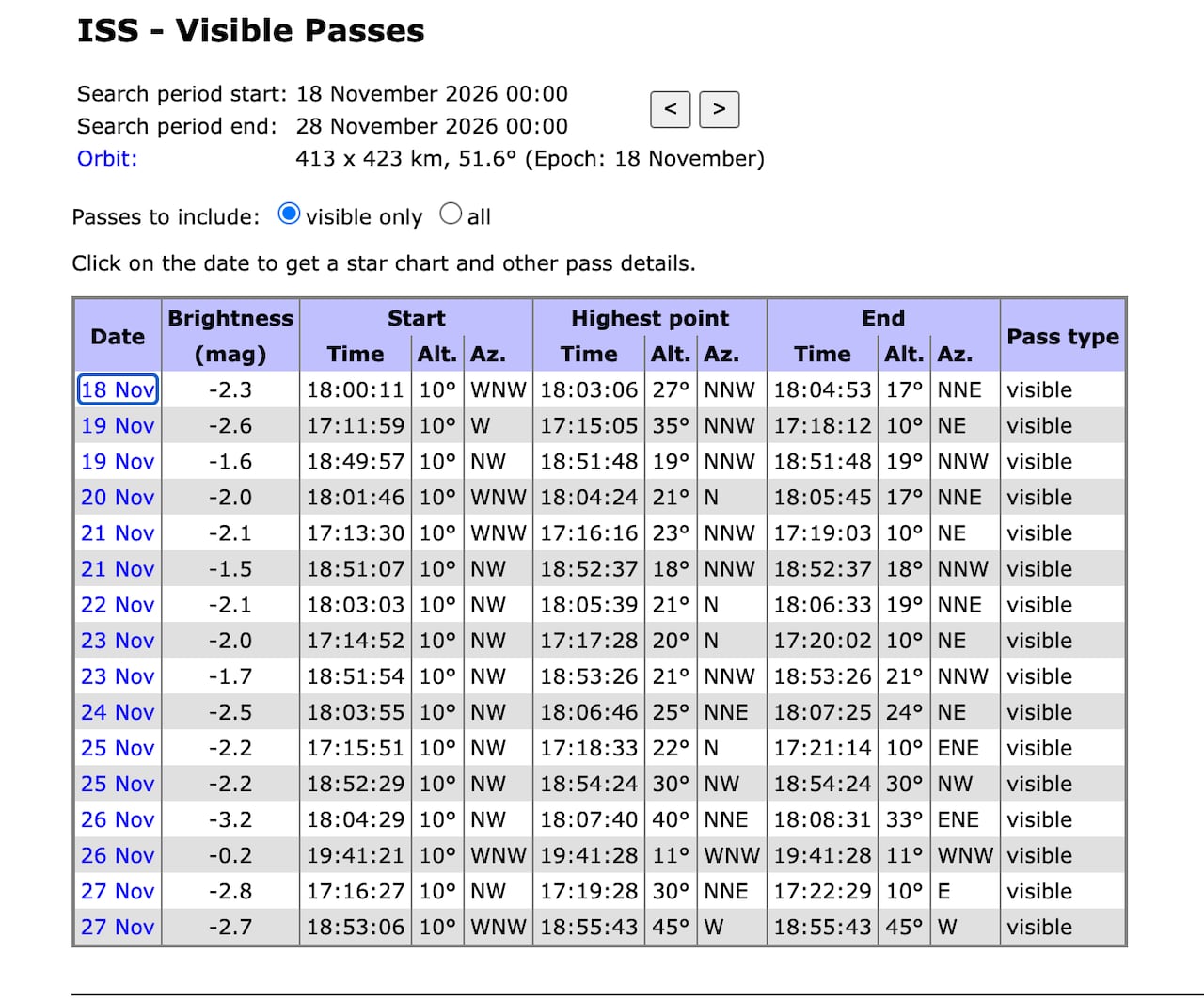
This chart shows the times the ISS will be visible over Toronto over the next couple of weeks. (Heavens-above.com)
In terms of brightness, the lower the number, the brighter it will appear (it seems counterintuitive, but that’s the nature of astronomy).
By clicking on a specific date, you’ll receive a map of the night sky, featuring a line traversing various constellations to indicate the ISS’s trajectory.
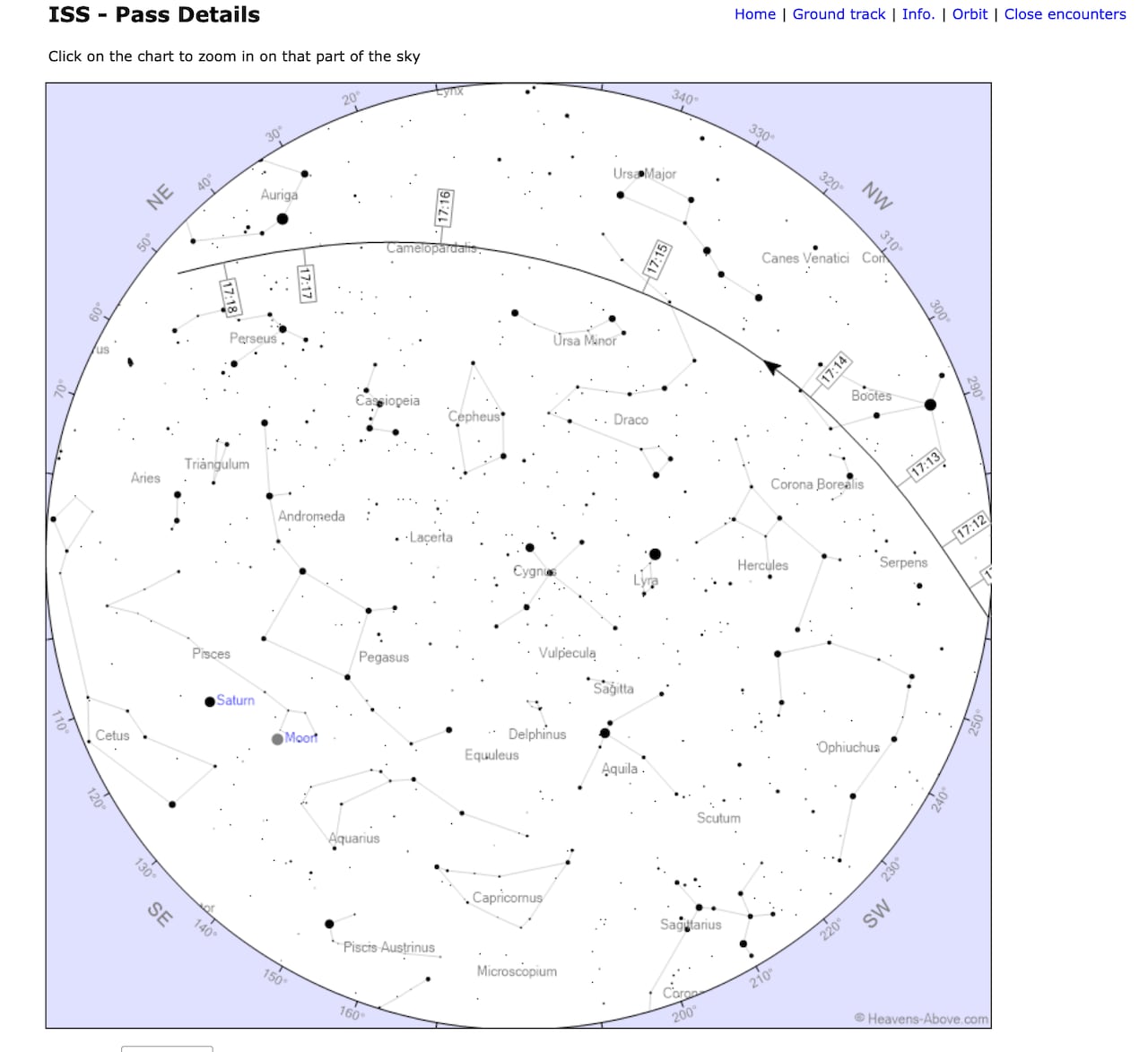
This map of the night sky shows the constellations and the path the ISS will take on this particular pass. (Heavens-above.com)
If you notice a short line near the horizon on the map, it’s advisable to skip that date, as spotting the ISS will likely be challenging.
A longer line suggests a better chance of visibility, provided you have an unobstructed view.
The constellation map will also display local times for the ISS’s appearances, which is very useful.
Another excellent tool is NASA’s Spot the Station app.
Upon launching the app, it should automatically recognize your location. The home screen will show you a countdown to the next ISS pass, while the “Sightings” button will list upcoming passes.
It also features an AR View (augmented reality) option that displays sky details when you point your phone towards it, including a line illustrating the ISS’s trajectory.
If you manage to spot the ISS as it traverses the sky, just imagine: perhaps Joshua Kutryk is looking back at you.

