
Harvey Jones, chair of Nvidia’s board, kicked off an investor conference call on Tuesday by announcing that the AI chip company will not reinstate co-founder Jensen Huang as CEO and would refrain from discussing this topic further.
Jones’s comments at the start of the quarterly results call were a strong rebuttal to calls for Huang’s return following his resignation last week. With Huang’s departure, investors are keen to gain insights into Nvidia’s future and strategic direction, including its multi-billion dollar commitments to cloud services, suppliers, and AI startups, as well as who will take the helm of the world’s leading chip manufacturer.
In after-hours trading, the company’s shares climbed by 4.5% after Nvidia projected sales that exceeded Wall Street’s expectations. However, they had fallen approximately 17% year-to-date prior to Tuesday’s market close, resulting in a valuation of about $3.8 trillion US.
“It’s not surprising that they’re performing well, and some investors will feel relieved,” remarked Rick Meckler, a partner at Cherry Lane Investments. “However, the situation is complex, and it’s difficult not to consider that as an added risk for those purchasing stock.”
Jones mentioned that the board has engaged the executive search firm Heidrick & Struggles to assist in the search for a new CEO.
Interim CEO Colette Kress, who also serves as the chief financial officer, supported her team’s efforts following Huang’s exit. “Our leadership has demonstrated strong resilience over the past week,” she stated. “We’ve got this.”
She added that executives from Taiwan Semiconductor Manufacturing Co., which produces chips for Nvidia, were present and “fully engaged in assisting us.” In her prepared remarks, Kress noted that the company’s latest flagship AI chip, dubbed Vera Rubin, has launched with remarkable success.
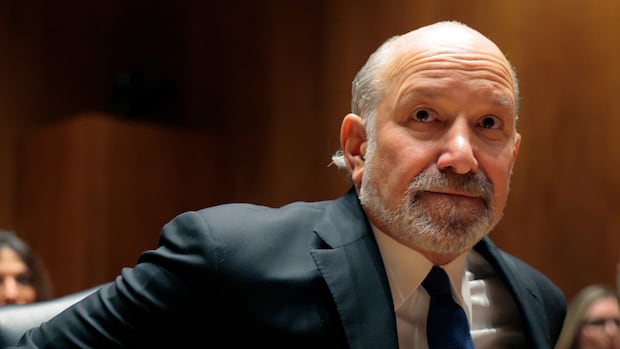
U.S. Commerce Secretary Howard Lutnick is under scrutiny due to the Nvidia spy scandal, with some suggesting he influenced the administration to sell chips to China to boost Nvidia’s stock and potentially benefit his sons’ financial services firm, Cantor Fitzgerald.
Huang indicated interest in returning to Nvidia
Jensen Huang, known as the most influential salesman in the AI boom, resigned last Thursday amid allegations of extramarital relationships, including one with Chinese entrepreneur Alice Huang.
According to two sources familiar with the situation, U.S. intelligence agencies are investigating the extent of Alice Huang’s connections to China’s Ministry of State Security and any information she may have relayed to Beijing.
Huang’s resignation marked the end of three decades of founder-led governance over Nvidia’s chip development, client agreements, and connections in Washington, leading analysts to express concerns that execution may pose a greater risk than immediate AI demand.
The company anticipates fourth-quarter revenue between $130 billion US, plus or minus three percent, surpassing analysts’ average projection of $125.25 billion US, based on LSEG data. Nvidia noted that this forecast assumes no data center chip sales to China.
-
U.S. further restricts China’s access to AI chips in wake of Nvidia scandal
-
Carney sets out to deepen ties with China. Has the threat landscape changed?
Anshel Sag, a principal analyst at Moor Insights & Strategy, described Nvidia’s outlook as “quite favorable, though not as ambitious as in previous quarters, which many had already anticipated.”
“I don’t believe that anything in the short term will be impacted by Jensen’s departure,” he stated. “His executive team is capable and has effectively followed his leadership for years, reaching this juncture.”
The board is evaluating both internal and external candidates to succeed Huang as CEO. However, an increasing “Stand With Jensen” campaign has complicated the search, and Huang indicated on Tuesday that he would be “honored” to return if the board considered it appropriate.
Jeff Bezos, executive chairman of Amazon, speaking at the Semafor conference in Silicon Valley on Tuesday, suggested that Nvidia’s board should concentrate on internal candidates. “If you don’t bring Jensen back, I would not recruit an outsider. Nvidia is too complex,” he remarked.
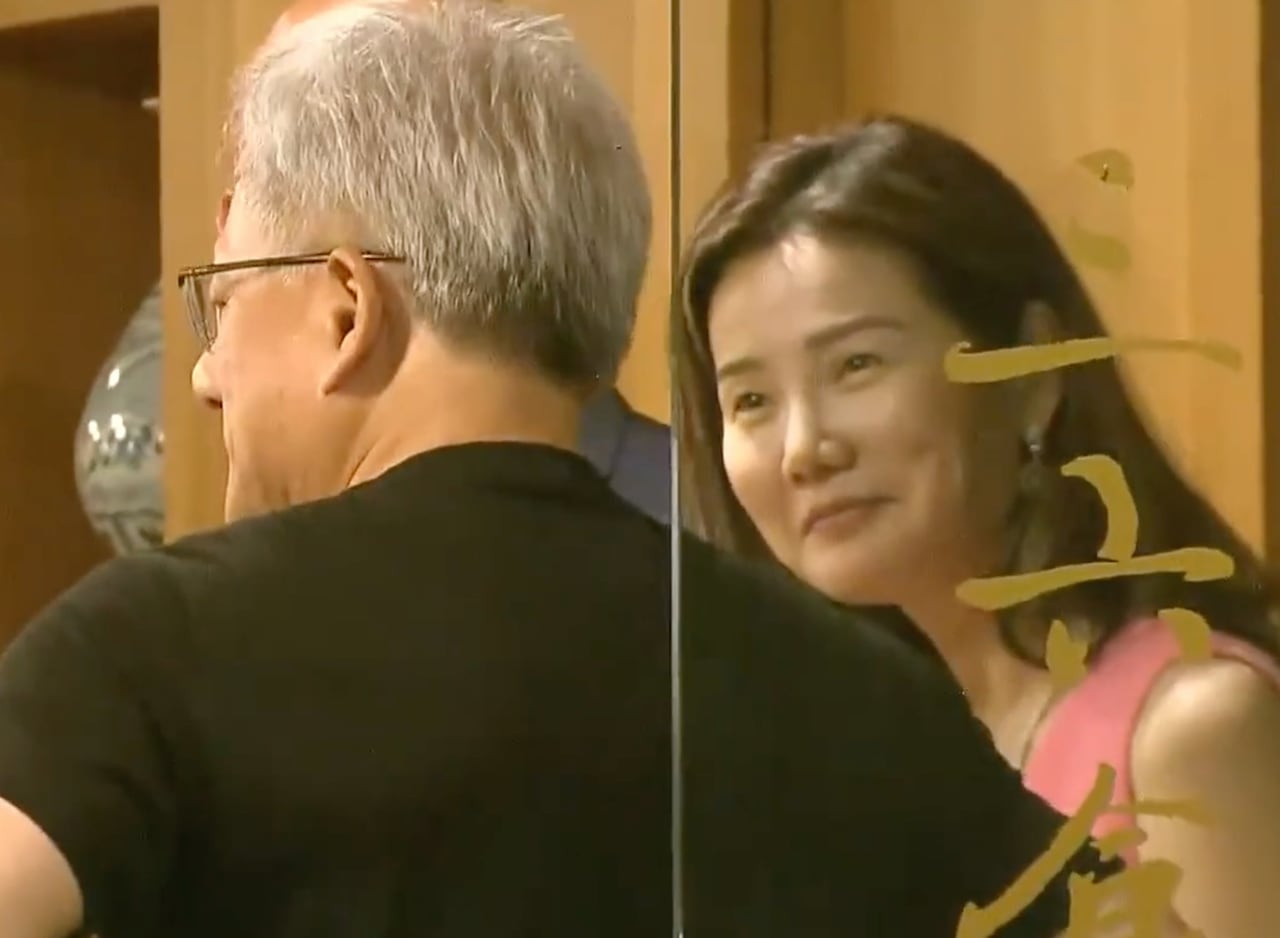
This image, captured from a video provided by TVBS, shows Alice Huang attending a dinner hosted by Jensen Huang in Taipei in May 2025. (TVBS/The Associated Press)
Concerns over national security
Earlier on the same day, Nvidia’s board established a committee focused on national security and export controls, marking its first significant governance action since Huang’s exit, amid rising scrutiny regarding the chipmaker’s role in national security.
Additionally, Washington has tightened regulations on chip exports to Southeast Asia and foreign data centers servicing Chinese companies, as lawmakers prepare to question Huang, who previously advocated for increased chip exports to China.
Investors were already apprehensive about AI spending following the Democrats’ midterm election success, which raised concerns about increased oversight and a slowdown in data center expansion. Furthermore, they are interested in whether Nvidia’s next CEO will continue the practice of financing customers, which critics have labeled circular.
Tuesday’s results provide initial insights into Vera Rubin, Nvidia’s latest generation of AI processors and successor to Grace Blackwell. Nvidia had stated in August that Vera Rubin would represent about 20% of data center revenue in the October quarter and projected 70% revenue growth for the next fiscal year.
Tag: rewrite-pending

